Turkey meatballs often get a bad rap for being dry or bland, but I’ve found that with a few small adjustments, they can become incredibly juicy and flavorful. The secret is in balancing moisture and crumb—using just enough binder and moisture to keep them tender without turning them into mush. It’s a simple tweak, but it makes a world of difference, turning a humble dish into something I genuinely look forward to making again and again.
I’ve tinkered with this recipe over years, trying to get that perfect bite—something that’s tender, with a slight bounce, and a well-rounded flavor. It’s not about over-complicating things; it’s about respecting the meat, listening to what it needs, and making small, thoughtful changes. When I finally cracked the code, it felt like a little victory—something I’d happily serve to friends or even just enjoy solo on a quiet night.
Focusing on the overlooked art of balancing moisture and crumb in turkey meatballs, this recipe emphasizes how small tweaks in ingredient ratios and technique can turn a simple dish into an unexpectedly juicy, tender experience that feels like a personal victory in the kitchen.
The overlooked art of balancing moisture and crumb
- I used to think turkey meatballs were bland, but a splash of lemon brightens them up surprisingly well.
- Getting the moisture right feels like a tiny victory—makes me proud every time I nail that juicy bite.
- This recipe reminds me of my grandma’s kitchen, where simple ingredients turned into comforting, imperfect perfection.
- Sometimes, I chaos-test the mixture—adding a little more breadcrumb or a splash of stock—to get that perfect tender crumb.
- Sharing these meatballs with friends feels like a small celebration—everyone’s reactions still crack me up.
The story behind this recipe
- Making these turkey meatballs was born out of a need to reclaim a dish I often found too dry or bland. One day, I decided to tweak the binder and moisture levels, trusting my instincts more than recipes. That little shift turned a familiar comfort food into something surprisingly juicy and tender, almost like a little secret I kept in my back pocket.
- The real inspiration came from late nights in my tiny kitchen, experimenting with what I had—leftover bread crumbs, a squeeze of lemon, and a dash of patience. It’s funny how simple ingredients, when combined with a bit of care, can transform into something more than just dinner. Now, I keep tweaking, always chasing that perfect, moist bite that makes me smile every time I serve them.
- heading
- story_type
Trivia and history of turkey meatballs
- Turkey meatballs became popular in the U.S. during the health-conscious 1980s, as a leaner alternative to beef.
- Originally, recipes varied widely by region—some added herbs, others favored spicy kicks or sweet glazes.
- In some cultures, turkey meatballs are a holiday staple, symbolizing abundance and family gatherings.
- The idea of balancing moisture and crumb in turkey meatballs emerged from traditional Italian and Mediterranean influences.
- Modern chefs often experiment with turkey meatballs using unconventional ingredients like quinoa or grated vegetables for added texture.
Key ingredients and tips
- Ground turkey: I prefer lean, but adding a bit of dark meat keeps these juicy; you can swap in chicken, but expect a slightly drier bite.
- Breadcrumbs: I use plain, toasted breadcrumbs for crunch, but crushed crackers or oats work in a pinch—just watch the texture.
- Egg: The binder that keeps everything together, no substitute here—unless you want a looser, messier ball, then go ahead.
- Onion and garlic: Fresh is best for that punch of aroma—sauté until golden and fragrant before mixing in the meat.
- Herbs: Parsley and thyme add freshness—skip them if you want a more neutral flavor, but they brighten the dish.
- Milk or broth: A splash keeps the meat tender—use stock for added depth, or skip if you prefer a firmer ball.
- Seasoning: Salt, pepper, and a pinch of red pepper flakes—don’t skimp, or you’ll miss the savory pop in every bite.
Spotlight on key ingredients
Ground turkey:
- I prefer lean, but adding a bit of dark meat keeps these juicy; you can swap in chicken, but expect a slightly drier bite.
- Breadcrumbs: I use plain, toasted breadcrumbs for crunch, but crushed crackers or oats work in a pinch—just watch the texture.
- Egg: The binder that keeps everything together, no substitute here—unless you want a looser, messier ball, then go ahead.
Herbs and aromatics:
- Fresh herbs like parsley and thyme: They add a bright, aromatic punch. Dried herbs can work, but they lack that fresh vibrancy.
- Onion and garlic: Sauté until golden and fragrant — they release a sweet, savory aroma that’s addictive during mixing and cooking.
Notes for ingredient swaps
- Dairy-Free: Use almond or coconut milk instead of regular milk. Keeps the moisture but adds a nutty twist.
- Gluten-Free: Swap breadcrumbs for crushed gluten-free crackers or ground oats. Expect a slightly denser texture.
- Vegetarian: Replace turkey with mashed chickpeas or lentils. Add extra herbs for flavor and moisture.
- Low-Sodium: Use unsalted breadcrumbs and reduce added salt. Keep an eye on the seasoning, taste as you go.
- Spicy Kick: Incorporate a dash of cayenne or chopped chili into the mixture. Adds heat and depth.
- Herb Variations: Swap parsley for cilantro or basil for a different fresh note. Tailor to your flavor preferences.
- Oily Texture: Add a teaspoon of olive oil into the mixture if you prefer a slightly richer bite. Will make them juicier.
Equipment & Tools
- Large mixing bowl: Combine ingredients evenly without mess.
- Baking sheet: Bake the meatballs evenly and allow for a slight crust.
- Skillet: Brown the meatballs for flavor and color.
- Spatula: Handle and turn meatballs safely.
- Measuring spoons: Ensure consistent ingredient ratios.
Step-by-step guide to turkey meatballs
- Equipment & Tools: Gather a large mixing bowl, baking sheet, skillet, spatula, and measuring spoons. The bowl is for mixing, the sheet for baking, the skillet for browning, and the spatula for handling.
- Preheat your oven to 200°C (390°F). This ensures even cooking and a slight crust on the meatballs.
- In the bowl, combine 1 lb ground turkey, 1/2 cup breadcrumbs, 1 beaten egg, 2 minced garlic cloves, 2 tbsp chopped parsley, 1 tsp salt, 1/2 tsp pepper, and a splash of milk (about 2 tbsp). Mix gently but thoroughly—don’t overwork the meat.
- Shape the mixture into roughly 1.5-inch balls. Keep them uniform for even cooking. Set aside on a tray or plate.
- Heat 1 tbsp oil in the skillet over medium heat (about 160°C/320°F). When shimmering, add meatballs in batches, avoiding overcrowding. Brown for about 3-4 minutes, turning occasionally, until golden all over.
- Transfer browned meatballs to the baking sheet. Bake in the preheated oven for 10-12 minutes. They should be firm but still juicy inside.
- Check doneness: The internal temperature should reach 74°C (165°F). The outside will be golden, and the meatballs will jiggle slightly when moved.
- Remove from oven and let rest for 3 minutes. Resting helps juices redistribute, keeping them moist.
- Serve hot, garnished with extra parsley or a drizzle of sauce. They’re best enjoyed with a side of greens or over pasta.
Let the meatballs rest for a few minutes after baking to lock in juices. Serve immediately or hold in a warm oven for up to 10 minutes. Garnish as desired and enjoy.
How to Know It’s Done
- Golden brown exterior with a slight jiggle when moved.
- Internal temperature hits 74°C (165°F).
- Meatballs feel firm but not dry when pressed gently.
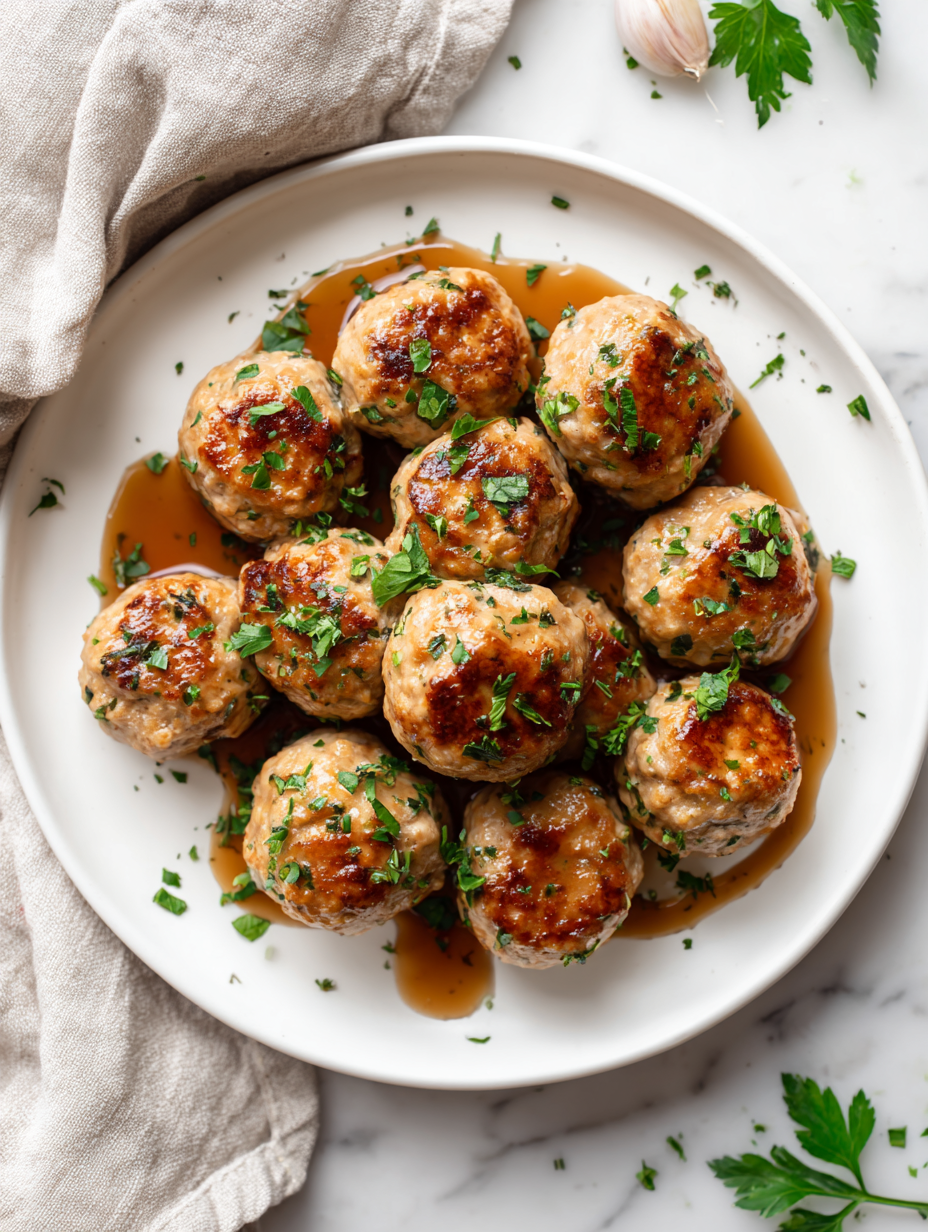
Juicy Turkey Meatballs
Ingredients
Equipment
Method
- Gather all your ingredients and preheat your oven to 200°C (390°F). In a large mixing bowl, combine the ground turkey, breadcrumbs, beaten egg, minced garlic, chopped parsley, salt, pepper, and milk. Gently mix everything together using your hands or a spatula until just combined; avoid overmixing to keep the meat tender.
- Shape the mixture into evenly sized meatballs, about 1.5 inches in diameter, placing them on a tray or plate. Keep them uniform for even cooking and a tidy appearance.
- Heat a tablespoon of oil in a skillet over medium heat until shimmering and fragrant. Carefully add the meatballs in batches, avoiding overcrowding, and brown them on all sides for about 3-4 minutes. You want a golden crust that adds flavor and texture.
- Transfer the browned meatballs to a baking sheet lined with parchment or a non-stick mat. Place them in the preheated oven and bake for 10-12 minutes, until they are cooked through and have an internal temperature of 74°C (165°F). The outside will be golden and slightly crispy, while the inside remains moist and tender.
- Remove the meatballs from the oven and let them rest for a few minutes. This helps the juices redistribute, keeping each bite juicy and flavorful.
- Serve your juicy turkey meatballs hot, garnished with extra parsley or your favorite sauce. They pair wonderfully with pasta, a fresh salad, or even on their own for a satisfying bite.
Pro tips for perfect turkey meatballs
- Use a gentle hand when mixing to keep the meatballs tender and moist.
- Slightly chill your mixture before shaping to prevent sticking and make handling easier.
- For a better crust, sear the meatballs at medium-high heat before baking.
- Add a tiny splash of lemon juice to the mixture for a fresh, zingy lift.
- Rest the meatballs briefly after baking to allow juices to redistribute, keeping them juicy.
- Use a light touch when shaping—firm but not tight—to avoid dense bites.
- When browning, avoid overcrowding the pan; cook in batches for even color and flavor.
Common mistakes and how to fix them
- TOO DRY: Overcooked turkey; fix by adding moisture during mixing or slightly undercooking.
- TOO GRAINY: Excessive breadcrumbs; reduce or blend into the mixture for smoother texture.
- UNEVEN SIZE: Inconsistent meatball sizes; use a cookie scoop for uniformity.
- FALL APART: Not enough binder; add an extra egg or a splash of milk to hold them together.
Quick fixes and pantry swaps
- If the meatballs are dry, splash them with warm broth before serving.
- When they fall apart, patch with a mixture of egg and breadcrumbs, then re-bake.
- Splash a little lemon juice if the flavor feels flat or dull.
- Patch over over-torched spots with a damp cloth to lift burnt bits gently.
- Shield delicate meatballs from sticking by using parchment paper or a non-stick mat when reheating.
Prep, store, and reheat tips
- Prepare the mixture and shape the meatballs up to a day in advance; store covered in the fridge to keep them fresh and prevent drying out.
- Cooked meatballs can be refrigerated for up to 3 days; keep them in an airtight container to lock in moisture and prevent fridge odor absorption.
- For longer storage, freeze meatballs on a baking sheet until firm, then transfer to a bag; they’ll keep well for 2-3 months. Thaw overnight in the fridge before reheating.
- Reheat gently in a skillet over low heat or in the oven at 180°C (350°F) until warmed through—look for a warm, fragrant aroma and a slight shimmer of juices reappearing on the surface.
Top questions about turkey meatballs
1. How do I keep turkey meatballs from drying out?
Use lean ground turkey, but add a little olive oil or a splash of broth to keep them moist and tender.
2. How should I mix the meatball ingredients?
Mixing the ingredients gently prevents dense, tough meatballs. Overmixing can make them chewy.
3. What oven temperature works best?
Baking at 200°C (390°F) for about 12 minutes usually does the trick, but always check for an internal temp of 74°C (165°F).
4. How big should I make the meatballs?
Form uniform-sized balls, about 1.5 inches, so they cook evenly and look tidy on the plate.
5. Should I brown the meatballs first?
Brown them well in a hot skillet first—about 3-4 minutes—then finish in the oven to keep them juicy.
6. Can I omit herbs or use dried herbs instead?
Add herbs like parsley and thyme for freshness, but you can skip or substitute with dried versions if needed.
7. How should I store leftovers?
Store cooked meatballs in an airtight container in the fridge for up to 3 days, or freeze for longer storage.
8. How do I reheat meatballs without drying them out?
Reheat gently in a skillet over low heat or in a warm oven, until fragrant and juices shimmer again.
9. What if my meatball mixture is too wet?
If the mixture feels too loose, add a bit more breadcrumb or an extra egg to help them hold shape.
10. How can I boost the flavor of my meatballs?
For extra flavor, add a squeeze of lemon or a splash of broth to the mixture for brightness and moisture.
These turkey meatballs are a reminder that simple ingredients, handled with care, can surprise you with their tender, juicy bite. Making them has become a small act of rebellion against the often dry, bland expectations of turkey dishes. It’s honestly satisfying to serve something that looks humble but feels like a little triumph in the kitchen.
In a world full of quick fixes, these meatballs demand a bit of attention, but the payoff is worth it: flavor, moisture, and a touch of pride. Whether you’re whipping them up for a weeknight dinner or a casual gathering, they carry a quiet confidence that’s hard to beat. Sometimes, it’s those little tweaks that turn a routine dish into a real moment of kitchen satisfaction.